When a student’s report card slips, the instinctive reaction is often to assign blame to effort or aptitude. Parents urge their children to study longer, teachers recommend extra practice worksheets, and students internalize the demoralizing belief that they simply lack the brain for advanced mathematics, analytical writing, or foreign languages. In reality, sustained academic struggle is rarely an issue of raw intelligence. It is almost always a structural problem: the conventional classroom moves on a rigid calendar, leaving behind anyone whose learning pace diverges from the median.
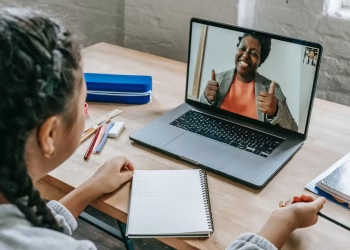
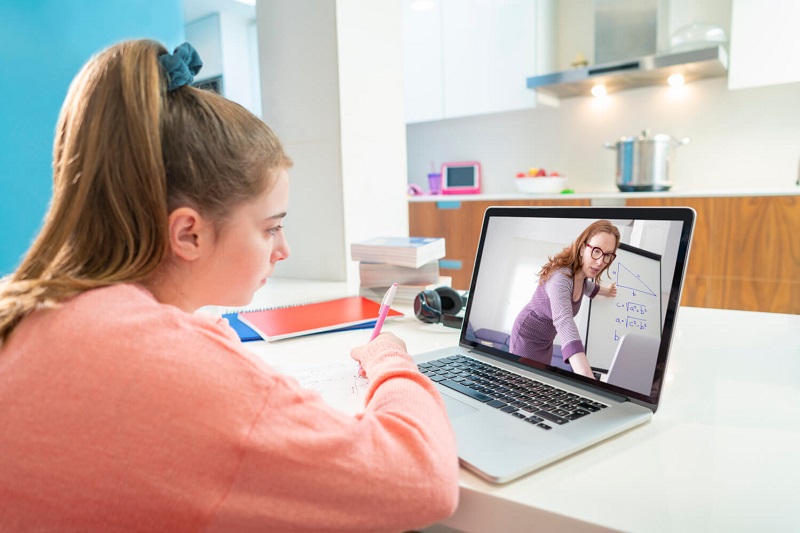
In a typical class of twenty-five to thirty students, an instructor cannot pause a syllabus to untangle one student’s confusion over quadratic factoring or thesis formulation. When foundational gaps go unaddressed, they compound over weeks and semesters until a minor misunderstanding transforms into chronic low performance. This is where an experienced online tutor shifts the trajectory. By converting passive screen time into dynamic, one-on-one coaching, virtual instruction offers students the diagnostic precision, personalized pacing, and strategic accountability required to raise their grades permanently.
Pinpointing Foundational Gaps Behind Poor Performance
Classroom exams are designed to measure current recall, not diagnose root causes. When a student earns a low C on a pre-calculus test, the letter grade signals a deficit, but it does not reveal where the conceptual chain broke down. Frequently, the issue is not the current chapter at all. A student struggling with trigonometric proofs may actually be stumbling over fraction operations or basic polynomial factoring taught two grades earlier.
A skilled online tutor acts as an academic diagnostician. Rather than merely reviewing the latest homework assignment, they evaluate the underlying mechanics of how a student approaches a problem. Through targeted questioning and low-stakes diagnostic exercises, tutors trace errors back to their original fault lines.
Once those hidden gaps are identified, remediation can be surgical. Instead of retaking an entire course or reading hundreds of textbook pages, the student spends focused sessions rebuilding the specific prerequisite concepts they missed. Once the foundational scaffolding is solid, their comprehension of current classroom material accelerates rapidly.
Tailoring Instructional Methods to Individual Cognitive Styles
The standard school curriculum relies heavily on auditory lectures and standardized text explanations. If a student does not process information efficiently through that specific medium, they spend the school day in a state of cognitive fatigue.
Online tutoring breaks this uniformity by adapting the delivery method to the student’s natural cognitive rhythm. With modern digital environments, instruction moves far beyond a simple video call:
-
Interactive digital whiteboards allow visual learners to map out historical timelines, cellular biology cycles, or algebraic functions in real time.
-
Collaborative document editing enables tutors to provide line-by-line feedback on essay structure, rhetoric, and grammar as the student writes, rather than returning a red-inked draft days later.
-
Screen sharing and interactive simulation tools turn abstract physics equations or economic theories into dynamic models that students can manipulate firsthand.
Equally important is the adjustment of instructional pacing. In a private online session, there is no peer pressure to nod along pretending to understand a concept. If an idea requires three different explanations using distinct metaphors, the tutor can pivot instantly. Conversely, if a student grasps an idea immediately, they do not have to wait for the rest of a classroom to catch up; they can move directly to higher-level application.
Teaching Executive Function and Study Architecture
Many students receive low marks not because they fail to understand the subject matter, but because they have never been taught how to manage academic workload. They cram the night before an exam, read through highlighted notes passively, misplace assignment deadlines, and struggle to break multi-week research projects into manageable tasks.
Effective online tutors do not simply explain academic content; they teach metacognition and academic workflow. They show students how to move from passive rereading to high-yield study techniques like active recall and spaced repetition. A tutor helps a student build structured study calendars, organize digital class notes, synthesize complex chapters into functional outlines, and construct self-quizzing materials.
By transforming disorganized effort into a repeatable, efficient system, tutoring reduces the hours spent staring blankly at a desk while simultaneously producing far better test outcomes. The student learns how to learn, an asset that pays dividends across every subject on their schedule.
Dismantling Academic Anxiety in a Safe Environment
Classroom dynamics can be socially intimidating. Many students would rather take a poor grade on a quiz than raise their hand in front of thirty peers to admit they do not know what the teacher just said. This hesitation breeds chronic anxiety, and anxious brains struggle to retain complex information or perform well during timed assessments.
The one-on-one virtual format provides complete psychological safety. Behind a screen in the comfort of their home, students feel far less vulnerable asking foundational questions. There are no classmates to impress and no fear of judgment.
As an online tutor guides a student through challenging problems with patience and constructive guidance, the student experiences a steady sequence of small, verifiable wins. This gradual accumulation of mastery shifts the student’s internal narrative from “I am bad at this” to “I can solve this if I use the right method.” That shift in self-efficacy is frequently the single biggest driver of higher test scores, as it eliminates the mental panic that causes careless mistakes during exams.
Maximizing Consistency Through Flexible Scheduling
Physical tutoring historically imposed considerable logistical friction: coordinating commutes across town, working around rush-hour traffic, and fitting rigid appointments into busy family schedules. When tutoring is inconvenient, sessions are routinely canceled, breaking the rhythm of consistent reinforcement.
Online tutoring eliminates geographic and logistical boundaries. Families can connect with elite subject-matter specialists regardless of where they live, choosing educators whose teaching style precisely matches the student’s personality.
Furthermore, virtual platforms allow for adaptive scheduling. A student can schedule a focused thirty-minute session the night before an unexpected chemistry quiz, or submit an essay draft for an asynchronous video review ahead of a midnight portal deadline. Because sessions integrate smoothly into a student’s normal routine, consistent practice is sustained over the entire grading period rather than treated as an emergency intervention at the end of the term.
Raising a student’s grade point average is rarely about working harder; it is about working with precision. By pairing individualized instruction with strategic study habits and targeted diagnostic support, an online tutor gives students the clarity, confidence, and tools required to master their coursework and take ownership of their academic trajectory.