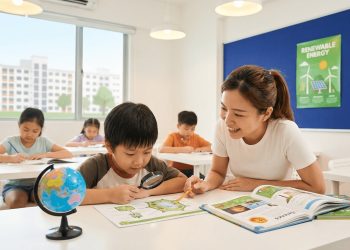

Primary 2 is an important year because children are no longer just adjusting to primary school. They are expected to read more independently, write with clearer ideas, solve more complex Maths questions, and explain their thinking with greater confidence. For many families, a primary 2 tuition centre can provide extra structure and guidance during this stage.
At this level, learning is still about building strong basics. Children need time to understand concepts, practise regularly, and apply what they learn in different ways. When these core skills are developed early, students are better prepared for the academic demands in Primary 3 and beyond.
Why Primary 2 Is a Key Learning Stage
Primary 2 may seem early, but it plays a big role in a child’s learning journey. By this stage, students are expected to become more independent in school. They need to listen carefully, follow instructions, complete written work, and manage simple learning tasks on their own.
In English, students begin to move beyond simple sentence writing. They learn to use better vocabulary, improve grammar, understand stories, and express their ideas more clearly.
In Mathematics, students work with more than basic numbers. They learn concepts such as addition, subtraction, multiplication, division, fractions, time, money, mass, length, and word problems. These topics may look simple at first, but they require strong understanding.
If a child is unsure about the basics, later topics can become harder. This is why Primary 2 is a good time to strengthen learning habits and close small gaps before they become bigger.
Building Strong English Skills
English is used across many subjects in school, so a strong language foundation matters. A child who reads well and understands instructions clearly will often find it easier to learn other subjects too.
At Primary 2, English support may focus on:
- Grammar and sentence structure
- Vocabulary building
- Reading comprehension
- Oral communication
- Creative writing
- Sequencing of ideas
- Answering questions clearly
Children at this age are still learning how to organise their thoughts. They may have good ideas but struggle to write them in complete sentences. Some may also find it hard to understand longer passages or explain why something happened in a story.
With guided practice, students can learn how to spot key details, use clues from the text, and write answers that make sense. They can also learn simple writing techniques, such as describing actions, using dialogue, and adding details to make a story clearer.
Strengthening Maths Understanding
Maths in Primary 2 is not only about getting the correct answer. It is also about understanding how and why a method works.
Many students can do basic sums but feel unsure when the question is written as a word problem. This happens because word problems require more than calculation. A child must read the question, identify the key information, choose the right operation, and show the steps clearly.
A good Primary 2 learning approach should help children:
- Understand number relationships
- Use models or drawings to solve problems
- Explain their working
- Recognise common question types
- Build accuracy and speed over time
- Apply Maths to real-life situations
Hands-on learning can be helpful for young children. For example, clocks can be used to teach time, coins can be used to explain money, and objects can help children compare mass or length. When children can see and touch what they are learning, abstract ideas become easier to understand.
Why Confidence Matters in Lower Primary
Confidence has a strong effect on how children learn. A child who feels unsure may stop trying, even when they are capable. On the other hand, a child who feels supported is more likely to ask questions, attempt challenging work, and learn from mistakes.
This is especially important in Primary 2 because children are still forming their attitude toward learning. If they begin to believe that English is “too hard” or Maths is “not for them,” they may carry that mindset into later years.
Supportive tuition can help by giving students a safe space to practise. When children receive clear explanations and regular encouragement, they become more willing to try. Over time, this can improve both their skills and their confidence.
What Parents Can Look For in Primary 2 Tuition
Not every child needs the same type of support. Some children need help catching up. Others may need more challenge to stretch their thinking. The right class should match the child’s current needs and learning style.
Parents may want to look for a programme that offers:
- Clear lesson structure
- Age-appropriate teaching methods
- Regular practice and revision
- Focus on both understanding and application
- Opportunities for children to speak and explain their thinking
- Teachers who can spot learning gaps early
A primary 2 tuition centre should not only prepare children for worksheets or tests. It should help them understand concepts deeply enough to use them in school and daily life.
For example, The Learning Lab’s Primary 2 programmes include English and Mathematics support that focuses on language mastery, writing, word problems, critical thinking, and real-world application. This reflects the kind of broad foundation that children need at this stage.
How Parents Can Support Learning at Home
Tuition works best when it is supported by simple habits at home. Parents do not need to turn every evening into a long study session. Short and consistent practice is often more useful.
Helpful habits include:
- Reading with the child for 10 to 15 minutes a day
- Asking simple questions about stories
- Practising spelling and vocabulary in small sets
- Reviewing mistakes without scolding
- Using daily situations to discuss Maths
- Encouraging the child to explain answers aloud
For example, parents can ask a child to read a sign, count change at a shop, compare the weight of two items, or tell the time before leaving the house. These small moments help children connect classroom learning with real life.
Preparing for the Next Stage
Primary 2 is a foundation-building year. It helps children become stronger readers, clearer writers, more careful problem solvers, and more confident learners.
When children receive the right support early, they are better prepared for the wider range of topics and higher expectations in Primary 3. A strong start does not mean rushing ahead. It means making sure the basics are secure before moving on.
For families considering extra academic support, Primary 2 tuition programmes can help children strengthen core skills at a steady and manageable pace. With patient guidance, regular practice, and the right learning environment, Primary 2 students can build the confidence they need for the years ahead.