
For generations, formal education operated on a simple, predictable contract: students sat quietly, absorbed codified knowledge from textbooks, memorized facts for standardized exams, and received credentials that signaled competence. That system was built for an industrial society that prized standardization, compliance, and predictable administrative tasks. In that environment, knowing specific facts and following established procedures was enough to build a reliable, lifelong career.
Today, that bargain has broken down. The exponential acceleration of technology, automated systems, and globalized communication has turned static knowledge into a commodity. When every student carries the collective sum of human facts, formulas, and historical dates in their pocket, the ability to recite information ceases to hold meaningful economic or intellectual value. The urgent challenge facing modern education is no longer how to distribute data, but how to cultivate the practical capabilities required to interpret, synthesize, and act upon that data. This reality has pushed skill-based learning from an alternative educational experiment directly into the center of educational reform.
The Breakdown of the Traditional Knowledge-Delivery Model
Traditional academic structures treat the human mind as a storage locker—an empty container waiting to be filled with dates, formulas, and historical summaries. While foundational literacy and conceptual numeracy remain indispensable, rote memorization without contextual application yields remarkably poor retention. Most students recall only a tiny fraction of the material they cram for semester exams, precisely because the information was never anchored to concrete utility.
When learning is detached from real-world application, it cultivates passive consumers of information rather than proactive problem solvers. Students learn how to pass tests by identifying the single “correct” answer among four options, but life outside the classroom rarely presents itself as a multiple-choice prompt. Professional environments, civic dilemmas, and personal hurdles arrive as ambiguous, messy challenges with competing trade-offs and incomplete information.
Skill-based learning confronts this shortfall by shifting the primary instructional goal from knowing that to knowing how. It treats knowledge not as an end in itself, but as raw fuel for human agency, creative synthesis, and practical problem-solving.
Foundational Competencies for an Unpredictable World
A common misconception is that skill-based learning focuses exclusively on vocational trades, such as plumbing, coding, or machining. While technical trades benefit enormously from this methodology, modern competency-based education encompasses a much broader cognitive architecture. It focuses on durable, transferable capabilities that maintain their value regardless of how specific industries evolve.
Critical Inquiry and Analytical Synthesis
In an era flooded with algorithmic recommendations, automated content generation, and deliberate misinformation, accepting information at face value poses genuine risks. Skill-based curricula train students to interrogate source material, identify underlying biases, and evaluate evidence before reaching conclusions. Rather than asking students to memorize the outcome of an event, an inquiry-driven curriculum asks them to examine primary documents, assess conflicting motivations, and debate alternative choices. This process turns critical thinking from an abstract slogan into a repeatable daily discipline.
Applied Digital Literacy
True digital literacy extends far beyond navigating social platforms or typing a document. Modern education requires students to understand how algorithmic architectures shape public opinion, how data sets can deceive just as easily as they inform, and how to harness digital tools to build original projects. A skill-based approach places students in active roles where they clean authentic data sets, build computational logic models, or configure productivity workflows to solve local community issues.
Collaborative Execution and Communication
Very few meaningful achievements occur in isolation. Yet traditional school environments systematically penalize collaboration, often treating mutual assistance as cheating. Skill-based programs deliberately structure work around interdisciplinary team dynamics. Students learn to negotiate differing perspectives, divide complex projects into manageable milestones, give candid peer feedback, and present their conclusions to varied audiences. These interpersonal mechanics consistently determine whether ambitious ideas succeed or stall in professional settings.
Bridging the Chasm Between Academics and the Workplace
Employers across diverse sectors voice a consistent frustration: recent graduates frequently possess impressive credentials alongside an inability to execute basic professional tasks. A degree in communications does not automatically prepare a candidate to mediate an upset client; a major in economics rarely ensures the capability to construct an actionable cash-flow forecast under pressure.
This widening competency gap has accelerated a broader corporate shift toward skills-based hiring. Increasing numbers of enterprises now look past institutional prestige, focusing instead on demonstrated portfolios, technical assessments, and tangible project records.
Skill-based learning bridges this divide by replacing hypothetical exercises with project-based deliverables. Instead of writing an essay about market dynamics that only an instructor reads, students analyze the supply chain of an actual regional business, identify delivery bottlenecks, and pitch their operational recommendations directly to leadership. When students graduate with a portfolio of verified work, their transition into professional life ceases to be an abrupt shock and becomes a natural continuation of habits they have already developed.
Cultivating Adaptability and Metacognitive Awareness
Perhaps the most compelling argument for skill-based education is the rapidly shrinking half-life of technical tools. Software frameworks, marketing channels, and engineering specifications that represent the vanguard of an industry today will be obsolete in ten years. Preparing students for a specific, static job description is an educational dead end.
When curricula center on competency, students learn metacognition—the art of understanding how they learn best. They develop comfort with iterative failure, recognizing that a failed experiment or broken line of code is simply diagnostic feedback rather than a permanent personal verdict. By repeatedly moving through cycles of experimentation, critique, and revision, learners develop intellectual agility: the quiet confidence that when confronted with completely unfamiliar tools or ambiguous parameters, they possess the analytical frameworks necessary to master them independently.
Redefining the Role of the Modern Educator
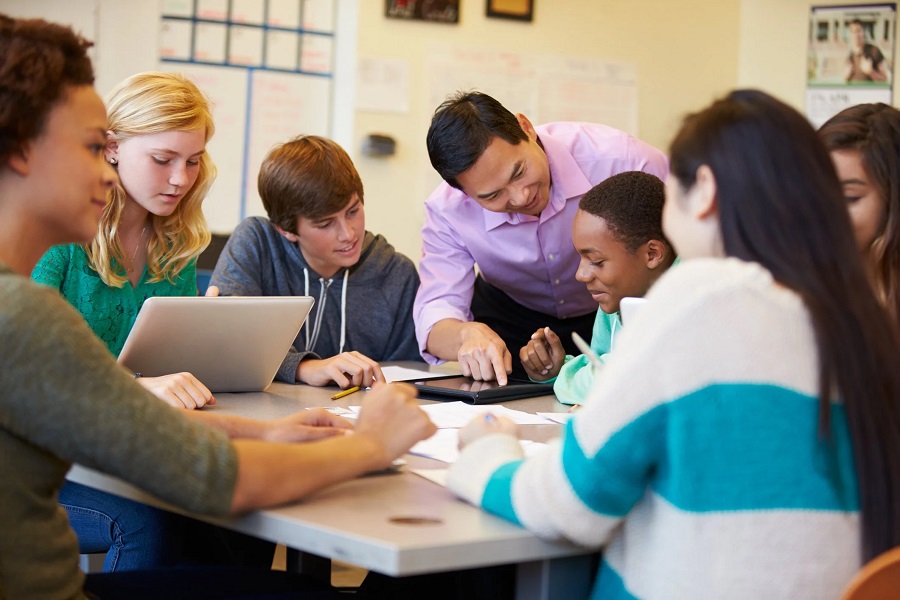
Transitioning to a competency-driven framework fundamentally alters the classroom dynamic. The teacher ceases to be the sole lecturer delivering knowledge from the front of the hall. Instead, educators become learning architects, expert facilitators, and developmental coaches.
This evolution demands more from instructors, not less. Designing an open-ended project that pushes twenty-five distinct students to think critically requires vastly more creativity and diagnostic nuance than lecturing through a slide deck. However, it also restores intellectual energy to teaching. Rather than policing compliance and grading repetitive worksheets, educators spend their instructional hours mentoring students through genuine intellectual discoveries, helping them dissect failures, and celebrating breakthrough moments of applied understanding.
Education cannot remain an exercise in historical preservation. The goal of schooling has never been to turn human beings into biological hard drives designed to duplicate textbook pages. The true measure of an educated mind is the ability to engage with an ambiguous, rapidly shifting world, discern what matters, and build solutions that improve human life. By grounding educational models in demonstrable, practical competence, we prepare students to not merely survive future disruptions, but to lead through them.